> For the complete documentation index, see [llms.txt](https://lumiwave-inno.gitbook.io/en-samurai-shodown-reborn-whitepaper/llms.txt). Markdown versions of documentation pages are available by appending `.md` to page URLs; this page is available as [Markdown](https://lumiwave-inno.gitbook.io/en-samurai-shodown-reborn-whitepaper/readme.md).
# Overview
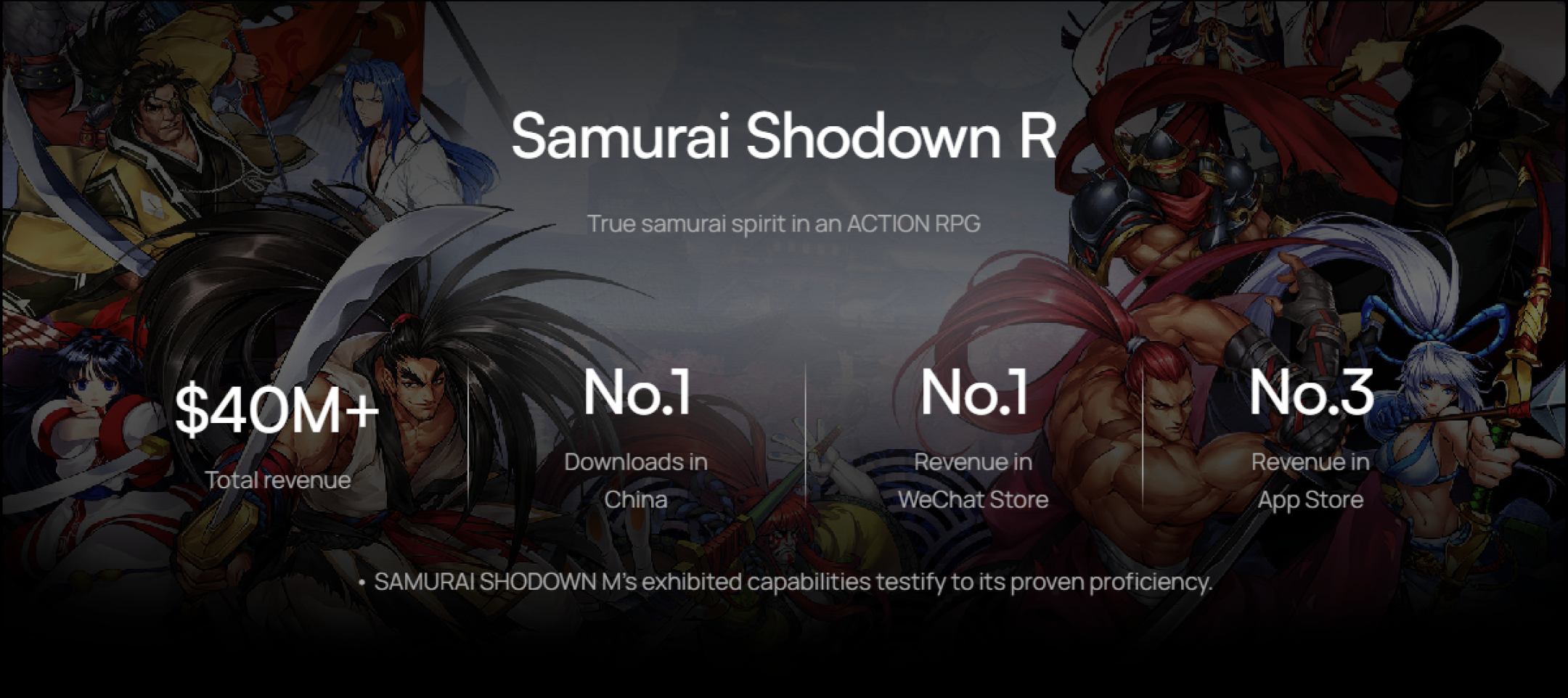
**Samurai Shodown R** is a mobile Web3 MMORPG co-developed by the legendary game developer **SNK** and **Lumiwave**. Built on the **Sui network** and the **Walrus protocol**, it delivers a scalable on-chain asset system combined with high-speed processing performance.
The game is based on SNK’s iconic fighting game **IP, *****Samurai Shodown***. Since its debut in 1993, this series has earned the love of fans around the globe for over **30 years**, establishing a distinct identity through intense one-strike combat, dynamic action, and the aesthetics of Edo-period Japan.
The core innovation of SSR lies in combining **a trusted IP with a sustainable Web3 ecosystem**. Unlike many P2E (Play-to-Earn) projects that rely on new characters or unfamiliar worlds, SSR lowers the entry barrier by using the well-known Samurai Shodown IP, building a trustworthy ecosystem. Decades of accumulated brand value and iconic characters like Haohmaru and Nakoruru provide a familiar environment and a fan-driven foundation where native Web3 mechanisms can function reliably.
PvP battle outcomes directly influence asset flows—winners earn SSR Points, while losers see a portion of their assets burned. This mechanism perfectly aligns with the tension-driven combat style unique to Samurai Shodown, forming a **self-reinforcing economic loop** with both reward and risk. As a result, in-game assets evolve beyond temporary rewards into strategic, tradable NFTs with real value.
SSR is built on a **Web3-native design** that goes beyond combat-centered play, enhancing immersion and ownership. Characters, mounts, and combat enhancement items exist as **dynamic NFTs** that evolve based on player activity. These assets increase in value through rarity and growth, and users can upgrade or unlock new content using SSR Points. SSR Points, or **$SSR**, can be converted into **$LWA**, the main token of the LumiWave ecosystem—creating a tangible link between gameplay and real asset value.
The **community structure** is also reimagined from a Web3 perspective. Limited-edition **premium Clan NFTs** grant rights such as clan creation, reward distribution settings, and access to exclusive missions, positioning holders as key contributors to the ecosystem. Additionally, an **AI-powered dashboard** analyzes and visualizes player combat data, match history, and clan activity—enabling strategy refinement and offering the foundation to tokenize and trade user-generated data. Through an architecture that records all gameplay outcomes and contributions on-chain, SSR realizes the value of player-generated data.
In this way, SSR aims to be more than a game—it’s **a connected ecosystem where gameplay, community, and economy work in unison**. Players experience combat, growth, investment, and competition simultaneously, unlocking new opportunities through Web3.
The vision of *Samurai Shodown R* is clear: to inscribe each player’s legendary journey onto the blockchain, creating a hybrid ecosystem where **immersion, IP power, and asset ownership converge**—so that decades from now, those legends will still be remembered.
Now, go beyond reclaiming past glory—engrave your own heroic saga on the blockchain.